GLP-1 Medications and Gut Health: How to Support Digestion, Nutrition, and Muscle
GLP-1 Medications and Gut Health
How to support digestion, nutrition, hydration, and muscle while your appetite and digestive rhythm are changing.
GLP-1 medications have changed the conversation around weight loss.
For many people, medications like semaglutide and tirzepatide are doing something that years of dieting, calorie counting, and white-knuckling hunger never could: turning down the constant food noise and making weight loss feel possible.
And that matters.
But maybe something else has changed too.
You're less hungry... but now you're constipated.
You get full after a few bites.
Foods you used to tolerate suddenly feel heavy.
You're nauseated, bloated, refluxy, or just not particularly interested in eating at all.
That's the conversation we want to have.
Because taking a GLP-1 and supporting your gut are not opposing approaches.
In fact, if you're using a medication that changes appetite, digestion, and how quickly food moves through your stomach, taking care of your digestive system becomes even more important.
First, what do GLP-1 medications actually do?
GLP-1 stands for glucagon-like peptide-1, a hormone your body naturally produces.
GLP-1 medications mimic or enhance some of that signaling. Depending on the medication, they can help regulate blood sugar, reduce appetite, increase feelings of fullness, and slow the rate at which your stomach empties.
That combination can make them very effective tools for weight management.
It also explains why your digestion may suddenly feel different.
Food may stay in the stomach longer. You may feel full much sooner than you used to. You may eat significantly less without really trying.
And gastrointestinal side effects like nausea, constipation, diarrhea, abdominal discomfort, and reflux are commonly reported with these medications, especially when beginning treatment or increasing the dose.
GLP-1s aren't "destroying your gut."
Your digestive system is operating under a new set of conditions. Your old eating habits may need to change with it.
If you're constipated on a GLP-1, you're not imagining it
This is one of the biggest complaints we hear about GLP-1 medications.
And when you think about what's changing, constipation makes sense.
You may be eating considerably less food, drinking less without realizing it, getting less fiber because you're eating less overall, moving less because you're nauseated or fatigued, or experiencing slower gastrointestinal motility.
Suddenly telling someone to "just eat more fiber" isn't necessarily the answer either.
If your stomach already feels uncomfortably full, dramatically increasing bulky fiber can sometimes make you feel worse.
Supporting regularity on a GLP-1
When you're eating less, it's surprisingly easy to drink less too. Keep fluids consistently available throughout the day rather than trying to catch up all at once.
Something as simple as walking can support normal intestinal movement. A short walk after meals can be a realistic place to start.
More isn't always better. Cooked vegetables, fruit, oats, chia, and other softer fiber sources may feel easier than suddenly adding huge salads or large amounts of supplemental fiber.
Don't normalize severe constipation
Going several days without a bowel movement, developing significant abdominal pain, persistent vomiting, or experiencing rapidly worsening symptoms isn't something to simply push through.
Your prescribing clinician needs to know when GI symptoms become significant.
Your dose, titration schedule, medications, food intake, or another medical issue may need to be evaluated.
The part nobody talks about enough: you still have to eat
One of the obvious benefits of GLP-1 medications is reduced appetite.
But there's an important difference between:
and
"I'm barely eating."
Your body still needs protein, vitamins, minerals, essential fats, carbohydrates, fiber, and enough total energy to function.
When appetite drops dramatically, every meal has to work a little harder for you.
This isn't the season for filling up on foods that provide very little nutritional value.
Think nutrient density.
What can you give your body in the amount you're realistically able to eat?
- Eggs or Greek yogurt at breakfast
- Chicken, fish, tofu, beans, or lentils with a meal
- Cooked vegetables instead of a huge raw salad if digestion feels sensitive
- Fruit paired with a protein source
- Soups, stews, or softer meals when heavier foods are difficult
- Smaller meals more frequently rather than forcing a large plate
The goal isn't to create another set of rigid food rules.
It's to make sure that less food doesn't accidentally become less nourishment.
Protein deserves special attention
When someone loses a significant amount of weight, the goal isn't simply to lose as many pounds as possible.
Ideally, we want to preserve as much lean body mass as we reasonably can.
Some loss of lean mass can occur with weight loss, whether the weight loss comes from lifestyle changes, medication, surgery, or another intervention.
That makes protein and resistance training especially important during GLP-1-assisted weight loss.
Current expert guidance emphasizes both.
You don't have to obsessively chase a perfect protein number from social media.
And if you're able, strength-based movement matters too.
Muscle isn't just about appearance. It plays a role in strength, mobility, metabolic health, and how well you function as you age.
Weight loss that leaves you smaller but weaker isn't the outcome we're looking for.
What about nausea and that "food just sits there" feeling?
Because GLP-1 medications slow gastric emptying, larger meals can suddenly feel like a lot.
If you're uncomfortable after eating, you may do better with:
- Smaller portions
- Slower eating
- Stopping when you first notice fullness
- Lower-fat meals when nausea is particularly bad
- Avoiding lying down immediately after eating if you're experiencing reflux
- Choosing simpler, easier-to-tolerate meals on difficult days
This is where listening to your body actually matters.
The portion you were used to eating before starting medication may no longer be the portion that feels comfortable now.
That isn't a failure.
It's information.
Hydration matters more than you think
We talk about hydration constantly at The Gut Center because digestion depends on it.
And GLP-1 therapy gives us another reason to pay attention.
If you're eating less, drinking less, dealing with constipation, or losing fluids through vomiting or diarrhea, hydration can become an issue surprisingly quickly.
Water should still be the foundation.
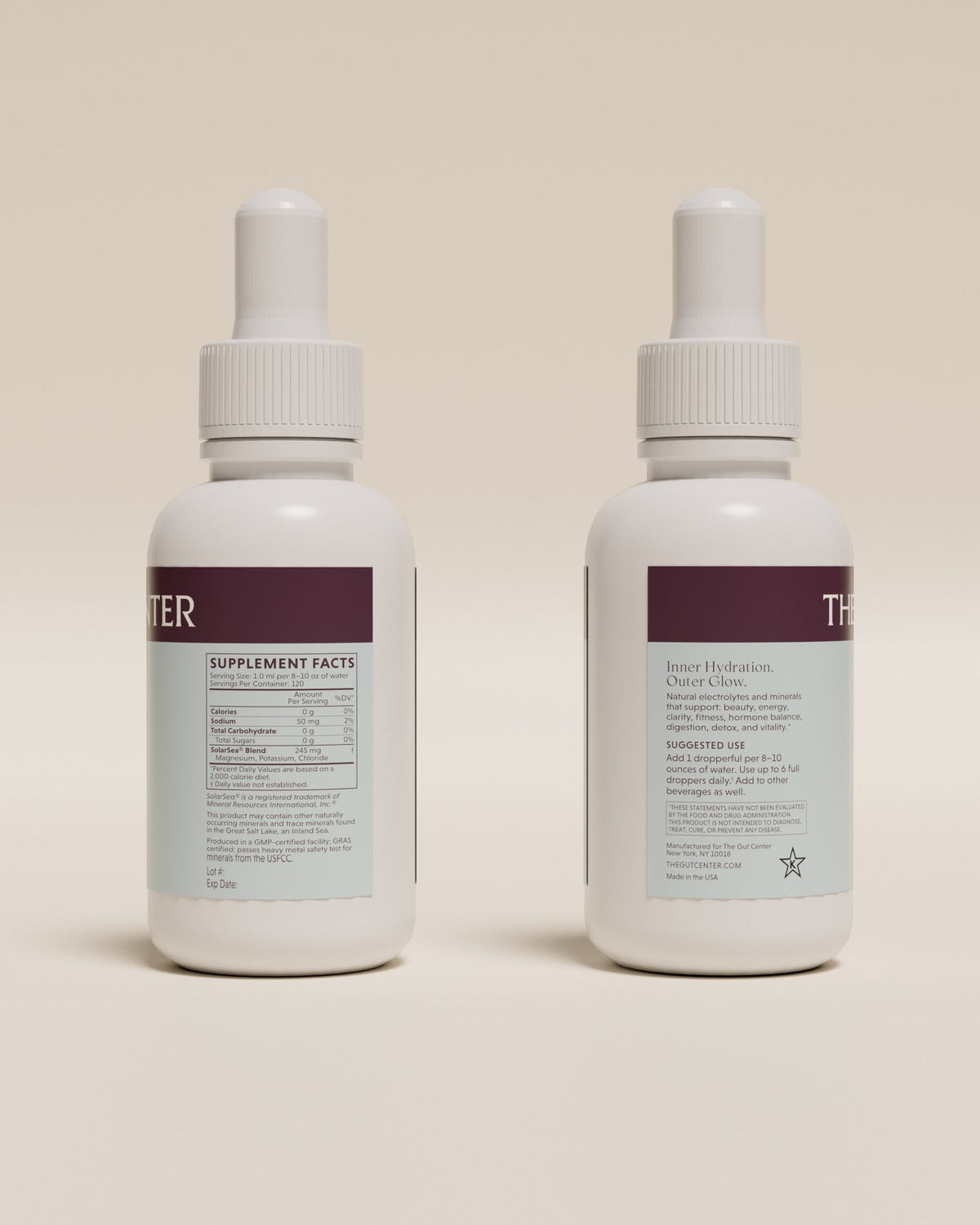
Electrolytes can be useful in certain situations, particularly when fluid losses are higher or it is difficult to maintain normal intake.
But electrolyte products aren't a substitute for drinking enough fluid, eating adequately, or talking with your healthcare team when symptoms are persistent.
Do you need to "heal your gut" before a GLP-1 can work?
No.
And this is one place we want to be really clear.
There isn't good evidence that everyone struggling with weight has one hidden gut problem that has to be fixed before weight loss is possible.
The gut microbiome and metabolic health absolutely interact, and this is an exciting area of research.
But human metabolism is complicated.
Genetics, hormones, sleep, medications, environment, food access, activity, muscle mass, stress, health conditions, appetite regulation, and many other factors can influence body weight.
We don't need to reduce all of that to:
And we don't need to tell someone that choosing medication means they've taken the "easy way out."
It doesn't.
What we can say is this:
No medication replaces the basic things your body still needs to function well.
Nutrition still matters. Digestion still matters. Sleep still matters. Movement still matters. Muscle still matters.
And those things can work with medical treatment rather than against it.
What happens if you eventually stop taking a GLP-1?
This deserves an honest conversation too.
Weight regain can happen after GLP-1 medications are discontinued.
That doesn't mean someone failed.
Obesity is a chronic, complex condition, and for some people medication may be part of long-term treatment.
For others, treatment plans change over time.
That's a decision to make with the clinician managing your medication, not based on a blog, supplement protocol, or wellness trend.
What you can work on during treatment
- Which foods make you feel good
- How to meet your nutritional needs with a smaller appetite
- How to keep your bowels moving comfortably
- How to hydrate consistently
- How to maintain muscle
- How to build routines you can actually live with
Those things matter regardless of how long medication remains part of your plan.
When should you call your healthcare provider?
Mild digestive symptoms can occur with GLP-1 medications, particularly during dose changes.
But don't assume every symptom is something you're supposed to tolerate.
Contact your healthcare provider if symptoms are severe, persistent, worsening, or making it difficult to eat or drink normally.
Seek prompt medical care for severe or persistent abdominal pain, repeated vomiting, inability to keep fluids down, symptoms of significant dehydration, or anything substantially different from your usual medication experience.
Never change, stop, or adjust a prescription GLP-1 medication based solely on something you read online.
Our take at The Gut Center
We don't think the conversation needs to be:
That's a false choice.
A medication can be helping you while your digestive system needs support.
You can be losing weight and still need to pay attention to protein.
You can appreciate that your appetite has finally quieted down while also realizing you're not drinking enough water.
You can want the benefits of modern medicine and want your meals, digestion, bowel movements, movement, sleep, and daily routines to support your health.
That's where we think the real opportunity is.
Not replacing one approach with another.
Building the foundation underneath whatever approach you and your healthcare team decide is right for you.
GLP-1 + Gut Health FAQs
Do GLP-1 medications cause constipation?
They can. Constipation is a recognized gastrointestinal side effect of GLP-1-based medications. Lower food and fluid intake and changes in gastrointestinal motility may also contribute.
Do GLP-1 medications slow digestion?
GLP-1 medications can slow gastric emptying, which means food may remain in the stomach longer. This contributes to increased fullness but can also contribute to nausea, reflux, or discomfort in some people.
What should I eat while taking a GLP-1?
There isn't one universal "GLP-1 diet." In general, prioritize nutrient-dense foods, adequate protein, fruits and vegetables you tolerate well, fluids, and meals that are appropriately sized for your appetite. Smaller meals may feel better if you're experiencing significant fullness or nausea.
Should I eat more fiber if I'm constipated?
Fiber can help support bowel regularity, but rapidly increasing fiber may worsen bloating or fullness for some people. Increase it gradually, drink adequate fluids, and discuss persistent constipation with your healthcare provider.
Why is protein important on a GLP-1?
When you lose weight, some lean body mass can be lost along with fat. Adequate protein intake combined with resistance exercise can help support muscle preservation during weight loss.
Can I stop my GLP-1 once I reach my goal weight?
That's a conversation for you and the clinician prescribing your medication. Weight regain is common after discontinuation in clinical studies, and some people may require longer-term treatment. Never stop or change your medication based on general online advice.
Build the Foundation Underneath Your Health
Medication may change your appetite. Your body still needs digestion, nourishment, hydration, movement, and a rhythm that supports you for the long haul.
Explore The Gut Center